


 Whatsapp
 Kenya Safari in November and December: Visa Process and Why the Short Rains Make It Ideal
Imagine waking before sunrise, wrapping up for an early morning game drive and watching the Maasai Mara slowly turn golden as the sun rises.
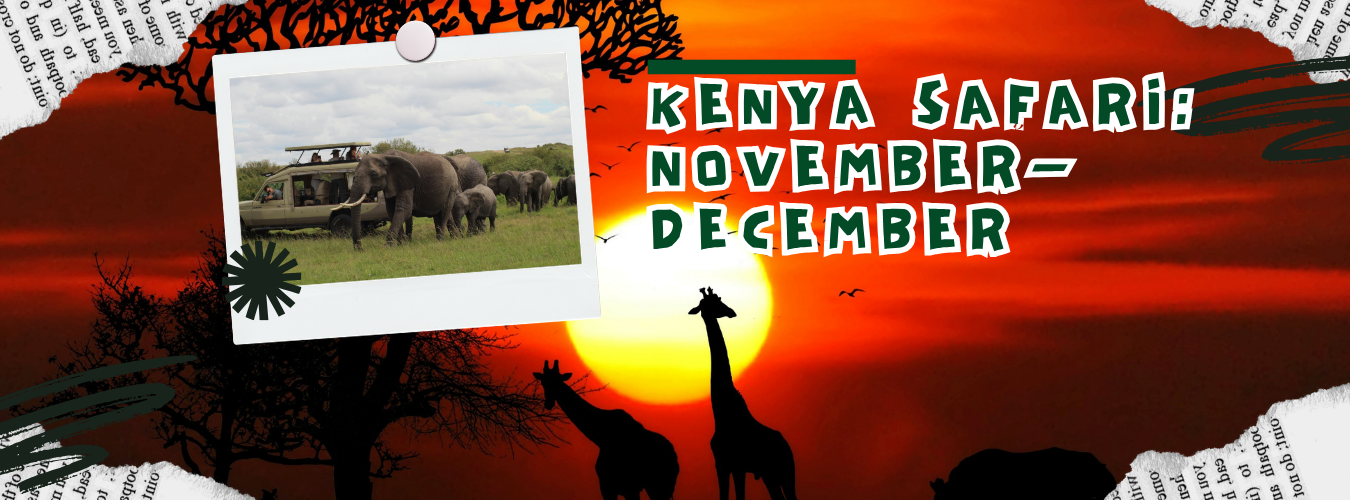
Imagine waking before sunrise, wrapping up for an early morning game drive and watching the Maasai Mara slowly turn golden as the sun rises.
A lioness may be returning from a night hunt. Elephants could be moving across the grasslands. Giraffes appear above the acacia trees, while zebra, antelope and buffalo spread across the plains.
For many Indian travellers, a Kenya safari is associated almost entirely with the Great Migration. That leads to an important question:
Is November or December too late for a Maasai Mara safari?
Not at all.
You need to understand what changes after the peak migration months. November and December offer a different version of Kenya: greener landscapes, dramatic skies, active resident wildlife and the seasonal transformation created by the short rains.
And if you are travelling from India, getting there has also become relatively straightforward. Kenya now operates an Electronic Travel Authorisation system for most international visitors instead of the traditional tourist visa process.
Key Takeaways
● November and December can be excellent months for a Kenya safari,
particularly for travellers who value wildlife, green landscapes and
photography.
● The famous Great Migration Mara River crossings are usually associated
with July through October, although exact timings change with rainfall and
herd movement.
● Some southward migration activity may continue around late October and
early November, but travellers should not book a November or December
safari expecting guaranteed river crossings.
● Maasai Mara has substantial resident wildlife throughout the year, including
lions, elephants, buffalo, giraffes, zebras and several antelope species.
● November generally falls within Kenya's short rains period, which can
transform dry grasslands into greener landscapes.
● Rain during the short rains does not necessarily mean continuous rain
throughout every safari day.
● December generally begins transitioning toward warmer and relatively drier
conditions.
● Indian tourists normally need an approved Kenya Electronic Travel
Authorisation, or eTA, before travelling.
● Kenya states that eTA applications are generally processed within three
working days, although travellers are advised to apply at least two weeks
before departure.
● Your passport, accommodation booking and arrival and departure itinerary are among the documents required for an eTA application.
Why November and December Deserve a Place on Your Kenya Safari Calendar
Search for the "best time for a Kenya safari" and you will repeatedly encounter July and August. There is a good reason for that. Those months fall within the period when enormous herds associated with the Great Migration enter the Greater Maasai Mara ecosystem from Tanzania's Serengeti. Travellers arrive hoping to witness one of Africa's most famous wildlife spectacles: wildebeest attempting to cross the Mara River. But the migration is only one part of the Maasai Mara story. Lions do not disappear when the migrating wildebeest move south. Neither do elephants, giraffes, buffalo, hippos, crocodiles, resident antelope or the Mara's extraordinary birdlife. This makes November and December particularly interesting for travellers whose goal is a complete African safari rather than only a river crossing.
First, Understand the Great Migration
The Great Migration is not a single event that happens on a particular date.
It is a continuous movement of wildebeest and other grazing animals through the
wider Serengeti and Maasai Mara ecosystem in response to rainfall, water and
fresh grazing.
The most famous part for Kenya visitors occurs when large herds reach the Maasai Mara .
When is the Great Migration in Maasai Mara ?
The migration into the Maasai Mara typically begins around July, although exact
timing changes from year to year.
July and August are among the most popular months for watching the migration,
while significant wildlife and herd activity can continue through September and
into October.
The dramatic Mara River crossings that appear in wildlife documentaries are
therefore most closely associated with this broader July to October period.
But nature does not follow a tourism calendar.
Rainfall influences when herds arrive, where they gather and when they begin
moving south again.
Was this helpful?
people found this helpful
Why November and December Deserve a Place on Your Kenya Safari Calendar
First, Understand the Great Migration


- Country